WRBB Alumni Remember Pioneering Work in Radio
One summer evening in 1972, 12‑year‑old Jacques Wells sat on his porch, changing the dial between Boston’s Top 40 giants, when the static changed. A voice cut through:
“Do not attempt to adjust your radio.”
What followed was music Wells had never heard on the big stations, on a low-power one called WRBB.
"It was just where you could get a certain kind of music — music that you wouldn't be able to listen to anywhere else,” says Wells, who became involved with WRBB from 1980 to 1990.
In the years that followed, WRBB developed a reputation that reached far beyond campus.
In the 1970s and ’80s, the station evolved from a predominately rock ‘n’ roll format into one shaped by and for the Black community, supported by Roxbury and other surrounding neighborhoods. WRBB, also nicknamed “Boston’s Spice,” was where listeners heard new R&B, jazz, gospel, funk, reggae, early hip‑hop and rock, long before commercial radio caught up. The station garnered an audience in a variety of ways, serving as an early adopter and curator of new music and techniques.
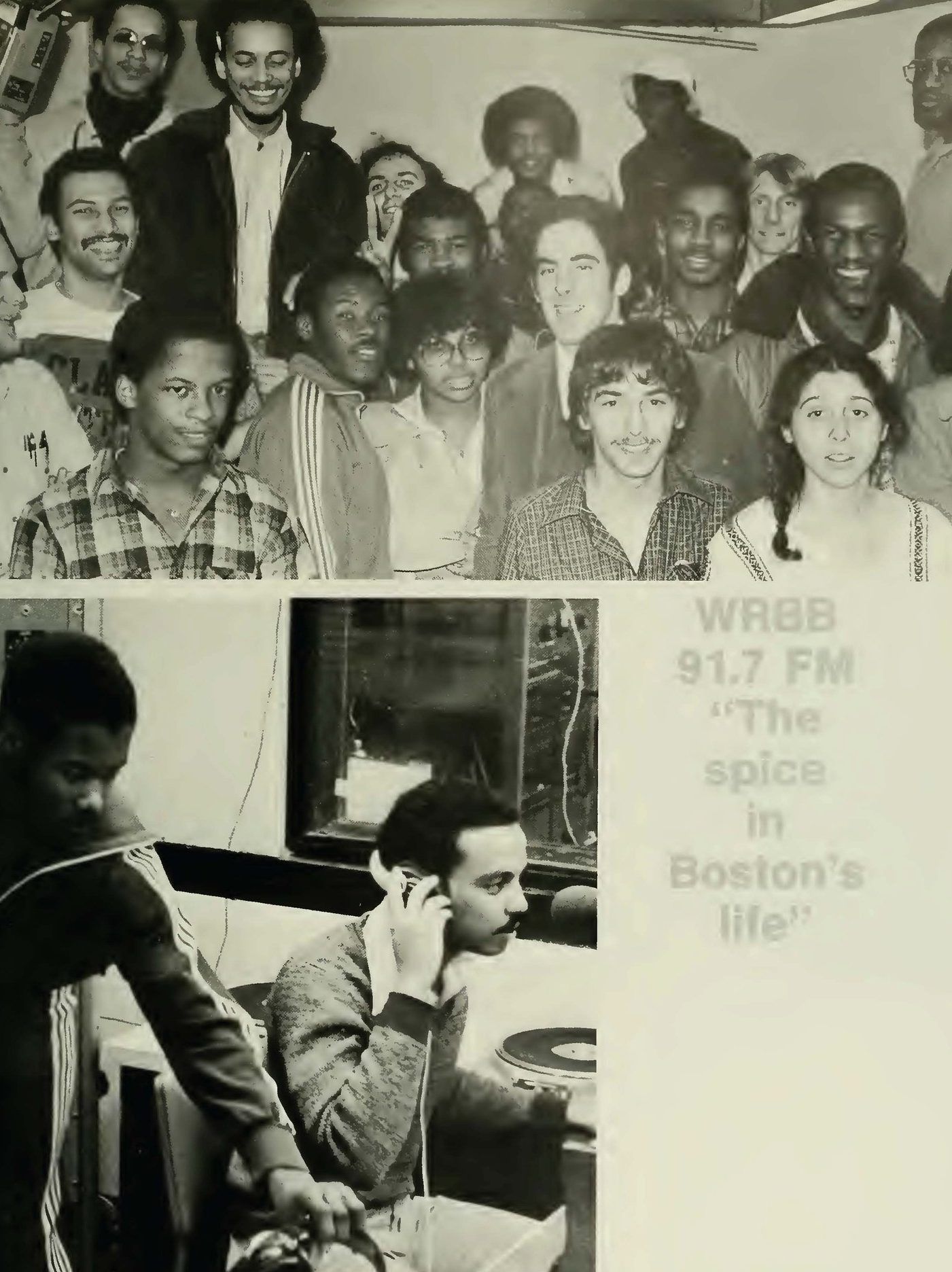
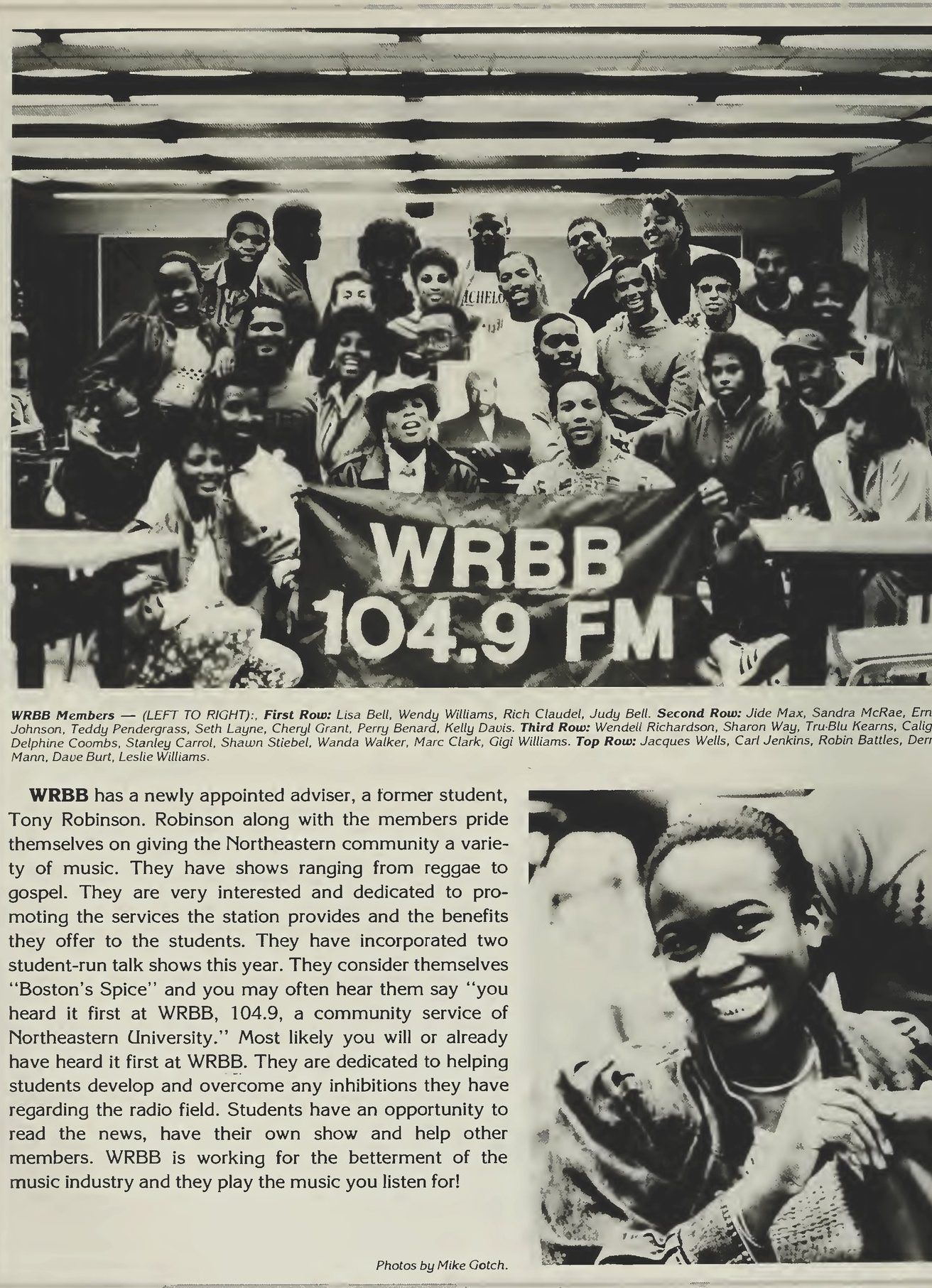
From left to right: Northeastern’s yearbook “The Cauldron” pages from 1980 and 1986.
“WRBB had a real presence in the community because I believe it was the only FM station that would play consistent R&B music. Not only would you hear R&B music, you’d hear the latest music because of the influence from New York and New Jersey,” says Roddy Rod, a WRBB DJ from 1984 to 1986.
The influence Roddy describes was powered by the Boston and New England record pools, in addition to members traveling to cities across the East Coast. They made connections with music artists and found records, airing them before they made the Billboard charts. They also received promotional pressings of vinyl to play as albums were being released.
“Not only did we come back three, four hours later from New York with the latest record, but then the whole scratching and blending came along,” says Harold Sealls, who started DJing at the station in 1977.
This led to WRBB’s eventual status as a “feeder station,” where promotional copies and unreleased tracks arrived from artists or major record labels ahead of official release dates. On any given day, listeners might have heard the last great surges of disco, a Marvin Gaye concept album, an early Prince track, or the emerging language of rap. Other stations in Boston fed off their curation and followed their lead.
“I'm not even sure if people in the community understood these were college students. This was a college station. Growing up in Roxbury, I just knew that WRBB played really good music,” Rod says.
Skeeter, a WRBB DJ who got his start in 1978, noted their newfound influence came from having a strong community.
“From ’78 on, WRBB was powerful. It was blowing out everybody — the first to play records, make records, making stars without even knowing it, because we did it just to do it. We did it because that’s who we were,” he said.
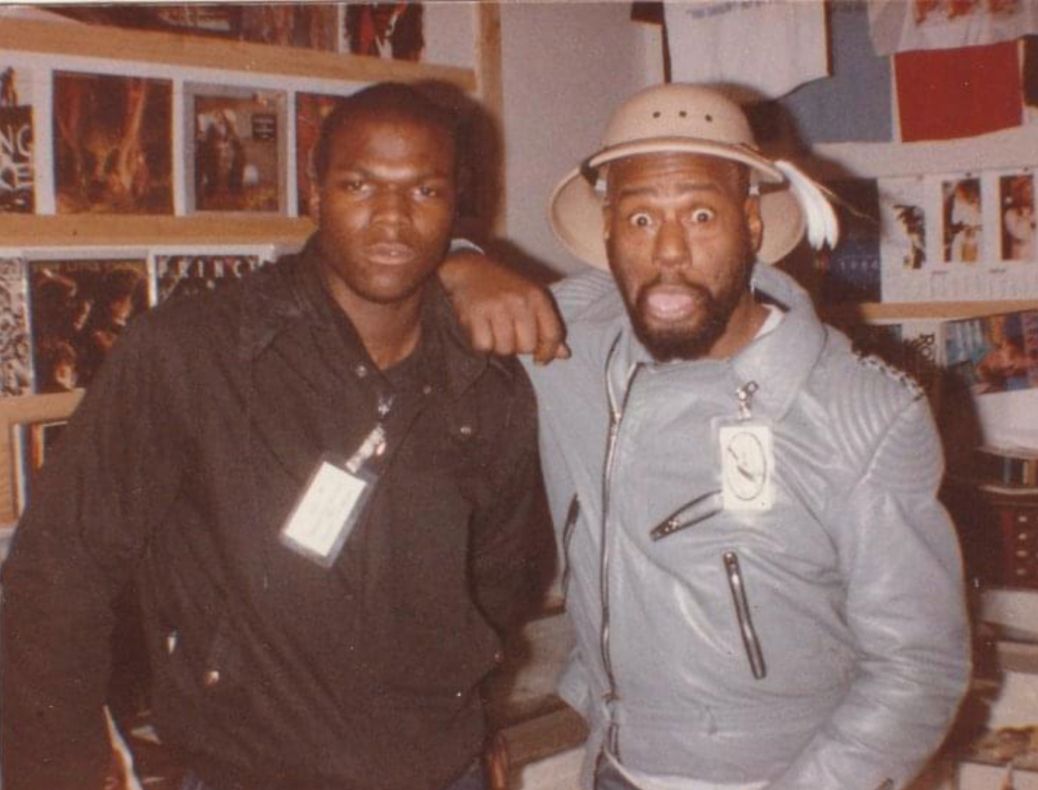
Skeeter (left) posing with George Clinton of Parliament-Funakdelic.
Behind the mic, the culture felt less like a student club than a small‑scale Motown, according to Mike Shannon, a WRBB DJ from 1982 to 1984.
“We were like a family. Some of us even lived in the station, sometimes we’d be in that radio station 16 hours straight,” Shannon says. “That type of environment fostered a lot of creativity and a lot of love.”
Many former DJs stressed how performance mattered as much as taste. Unlike today, members had to audition and refine their craft before making it on air, says James O’Bryant, a WRBB DJ from 1980 to 1987.
“All the DJs knew how to talk their way past their shadow,” Sealls says. “We had big egos. We loved the mic. We loved entertaining people.”
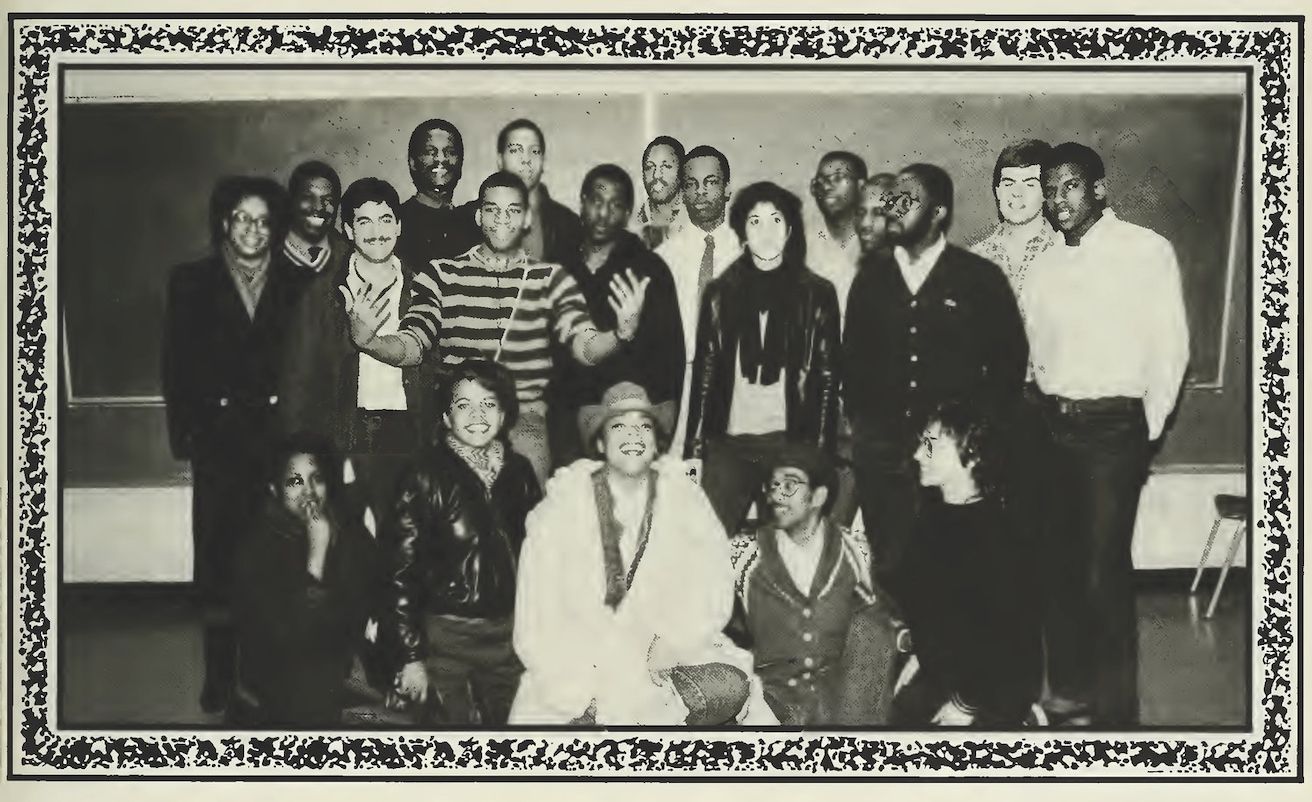
WRBB group photo featuring Roddy Rod, James O’Bryant and Jacques Wells from the Northeastern yearbook’s 1983 edition.
Their success, however, unfolded against a backdrop of exclusion. Boston’s nightlife was highly controlled, its clubs overwhelmingly white. Black music was welcomed as a revenue stream, but Black people themselves faced limited access. In response, WRBB created Monday night events at a club called 9 Lansdowne.
“We revitalized the nightlife in Boston for Black people,” Wells says.
Outside of music, Wells was also attracted to the news side of the station and hosted a talent segment, where he interviewed locals as well as influential figures like James Baldwin, Shirley Chisholm, and Butterfly McQueen.
“I got on [to WRBB] for a lack of proper representation of African Americans during a time of civil unrest,” he says.
Through his segment, Wells aimed to provide representation and educational awareness. He played Bobby Brown’s music during his hiatus from New Edition, at a moment when his solo career was still uncertain. He interviewed Brown, among other musical artists like Phyllis Hyman, Sylvester, Loose Ends, and Geraldine Hunt.
While WRBB was licensed as a college station, it operated in a separate sphere from Northeastern. Former DJs say the university neither invested in the station nor fully understood its role in the surrounding community. As the on‑air sound shifted and as more Black students joined the studio, tension with administrators increased.
“The powers at Northeastern obviously did not like the change in the station musically and the makeup racially,” says Caliga, who was involved as a DJ among other roles with the station from 1972 to 1991. Growing up in Roxbury, she describes an adversarial relationship between the neighborhood and campus. Caliga says WRBB was one of the few places where the neighborhood felt not just present but central.
Community allies helped students hold that space.
Northeastern’s African American Institute librarian Verdaya Mitchell-Brown guided them through campus politics. In 1978, a new advisor, Chuck Tarver, arrived and acted as a buffer between WRBB and Northeastern. Three years earlier, a Federal Communications Commission (FCC) ruling had put 10-watt, Class D stations like WRBB on notice — upgrade or get pushed out by stronger signals. Tarver helped WRBB secure a new frequency at 104.9 FM, a station in Gloucester that played classical music.
“We worked out an agreement to put the antenna on top of the building on Forsyth Street, it was a 10- story at the time, and was the tallest building on campus … we were able to gain some of the coverage area back that we had,” Tarver said.
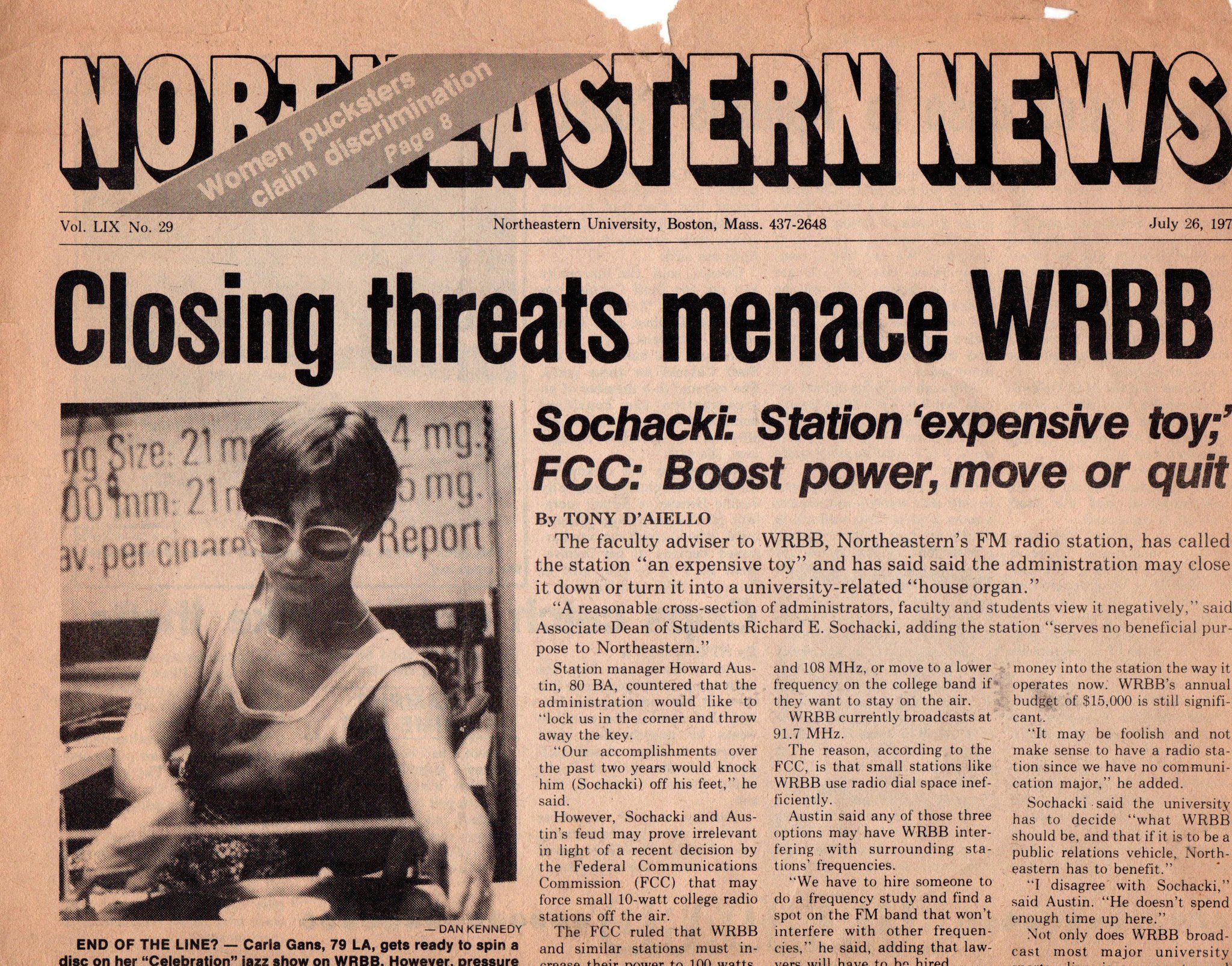
A Northeastern News clipping from 1979 featuring Caliga, depicting discourse on the FCC’s 1975 ruling.
Many former DJs, producers, and engineers trace their careers back to WRBB in commercial radio, concerts, television and record promotion. Wendy Williams (“The Wendy Williams Show”), Mike Shannon (Heart & Soul on SiriusXM), Harold Sealls (WBZ), Paul Porter (author, BET host) Jay Dixon (program director, iSoulRadio), Ayesha Diamond (Majic 102.1), Darius Walker (CNN), Diana King (iSoulRadio), Ray Fallon (WGBH), and Pebbles (Hot 96.9) are just a few names of those who credit their careers to the station.
“WRBB was an institution that gave people the permission to do what they thought they should do. It’s in our blood,” Sealls says.
What hasn’t traveled as far is the story behind that sound. Boston’s Spice alumni speak of being struck by how little today's members know about the previous decades shaping the station. Their hope for current WRBB staff to claim history as part of their own remains from each visit to the studio. Not as nostalgia, but as proof of what a student‑run signal can be when rooted in community as much as a university.